

Marco Buratti is a Full Professor of Geometry at Sapienza University of Rome. His research focuses on Discrete Mathematics and Design Theory, with particular emphasis on the construction of combinatorial designs with rich symmetry groups.
A recipient of the 1998 Hall Medal from the Institute of Combinatorics and its Applications (ICA), he is currently the Editor-in-Chief of the Bulletin of the ICA. He also serves as an Associate Editor for several leading journals, including: Journal of Combinatorial Theory Series A; Designs, Codes and Cryptography; Discrete Mathematics; Journal of Combinatorial Designs.
Professor Buratti has authored over one hundred papers and contributed to the Handbook of Combinatorial Designs. He has delivered numerous plenary lectures at international conferences and has mentored a successful group of scholars in his field.
Outside of his primary research, he has a long-standing interest in palindromes, a passion that led to two books and a long-running column for the Italian financial newspaper Il Sole 24 Ore.

Marco Buratti is a Full Professor of Geometry at Sapienza University of Rome. His research focuses on Discrete Mathematics and Design Theory, with particular emphasis on the construction of combinatorial designs with rich symmetry groups.
A recipient of the 1998 Hall Medal from the Institute of Combinatorics and its Applications (ICA), he is currently the Editor-in-Chief of the Bulletin of the ICA. He also serves as an Associate Editor for several leading journals, including: Journal of Combinatorial Theory Series A; Designs, Codes and Cryptography; Discrete Mathematics; Journal of Combinatorial Designs.
Professor Buratti has authored over one hundred papers and contributed to the Handbook of Combinatorial Designs. He has delivered numerous plenary lectures at international conferences and has mentored a successful group of scholars in his field.
Outside of his primary research, he has a long-standing interest in palindromes, a passion that led to two books and a long-running column for the Italian financial newspaper Il Sole 24 Ore.
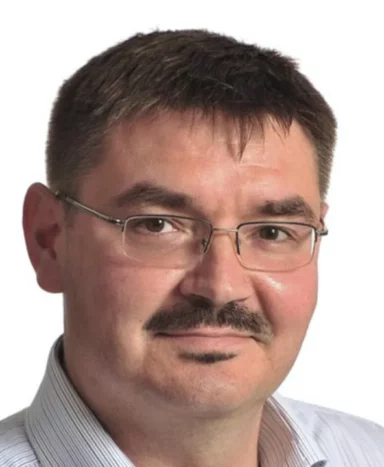
Professor Leszek A Gąsieniec is a computer scientist and Professor in
the School of Computer Science and Informatics at the University of Liverpool,
where he leads the Networks and Distributed Computing research group.
His research focuses on the design and analysis of efficient algorithms,
search problems, distributed computation, and networked systems.
He received his PhD in 1994 from the University of Warsaw, followed by
postdoctoral appointments at the Université du Québec à Hull in Canada
and the Max Planck Institute for Informatics in Germany.
Professor Gąsieniec joined the University of Liverpool in 1997, was appointed
to the Chair in Algorithms in 2003, and served as Head of the Department of
Computer Science from 2012 to 2015. His principal research contributions encompass
parallel pattern matching, communication in radio networks, combinatorial group testing,
search methods for mobile agents, and more recently population protocols.
He has authored over 200 peer‑reviewed publications in leading journals and
conference proceedings, with more than 6,000 citations and an h‑index of 45.
His work has been supported by major UK research funders, including EPSRC, MRC,
BBSRC, the Royal Academy of Engineering, and the Royal Society.
Professor Gąsieniec has edited several scholarly volumes and has served on the editorial
boards of Theoretical Computer Science and the Journal of Interconnection Networks.
He is a member of the EPSRC College and has served on evaluation panels for EPSRC and
the Royal Society in the UK, as well as for FNP and NCN in Poland, including in chairing roles.
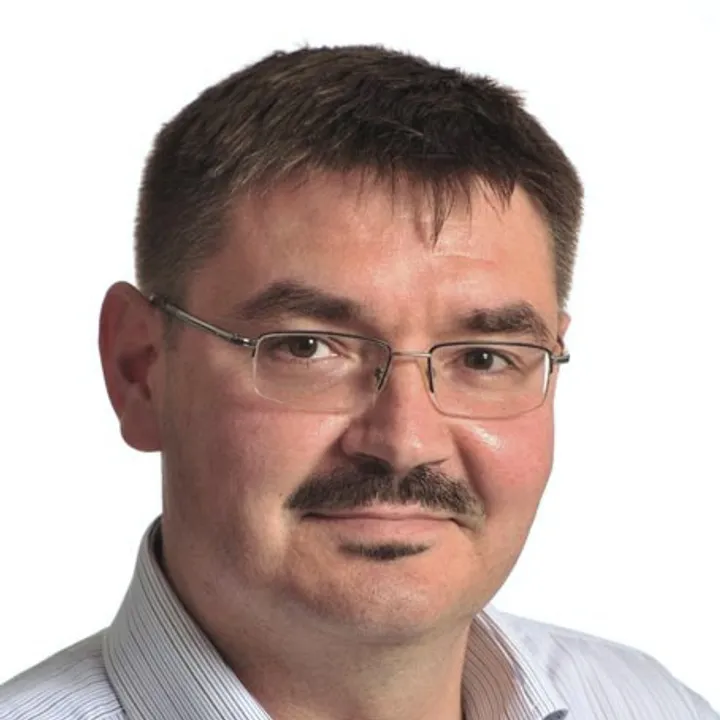
Professor Leszek A Gąsieniec is a computer scientist and Professor in
the School of Computer Science and Informatics at the University of Liverpool,
where he leads the Networks and Distributed Computing research group.
His research focuses on the design and analysis of efficient algorithms,
search problems, distributed computation, and networked systems.
He received his PhD in 1994 from the University of Warsaw, followed by
postdoctoral appointments at the Université du Québec à Hull in Canada
and the Max Planck Institute for Informatics in Germany.
Professor Gąsieniec joined the University of Liverpool in 1997, was appointed
to the Chair in Algorithms in 2003, and served as Head of the Department of
Computer Science from 2012 to 2015. His principal research contributions encompass
parallel pattern matching, communication in radio networks, combinatorial group testing,
search methods for mobile agents, and more recently population protocols.
He has authored over 200 peer‑reviewed publications in leading journals and
conference proceedings, with more than 6,000 citations and an h‑index of 45.
His work has been supported by major UK research funders, including EPSRC, MRC,
BBSRC, the Royal Academy of Engineering, and the Royal Society.
Professor Gąsieniec has edited several scholarly volumes and has served on the editorial
boards of Theoretical Computer Science and the Journal of Interconnection Networks.
He is a member of the EPSRC College and has served on evaluation panels for EPSRC and
the Royal Society in the UK, as well as for FNP and NCN in Poland, including in chairing roles.
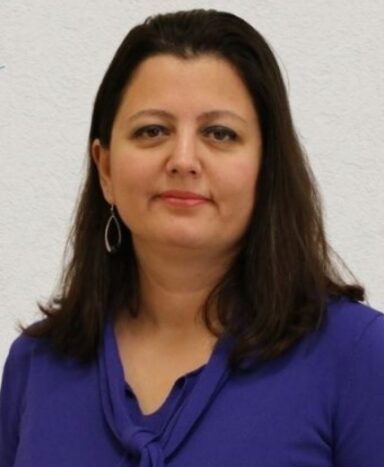
Didem Gözüpek is a Professor in the Department of Computer Engineering at Gebze Technical University, Türkiye. She received her B.S. degree in Telecommunications Engineering from Sabancı University in 2004, her M.S. degree in Electrical Engineering from the New Jersey Institute of Technology (USA) in 2005, and her Ph.D. degree in Computer Engineering from Boğaziçi University in 2012. Between 2005 and 2008, she worked as an R&D engineer at a telecommunications company in İstanbul.
Prof. Gözüpek is the recipient of several awards, including the Young Scientist (BAGEP) Award from the Science Academy of Türkiye, the Research Encouragement Award from the METU Parlar Foundation (2019), the Dr. Serhat Özyar Young Scientist of the Year Honorary Award (2013), and the Boğaziçi University PhD Thesis Award (2012).
She has served as the principal investigator of several national and international research projects. In particular, she has been the Coordinator of the COVER project, funded by the Horizon Europe Marie Skłodowska-Curie Staff Exchange programme, since 2025.
Her research interests include structural and algorithmic graph theory and optimization problems, with applications in areas such as computer networks and smart cities.
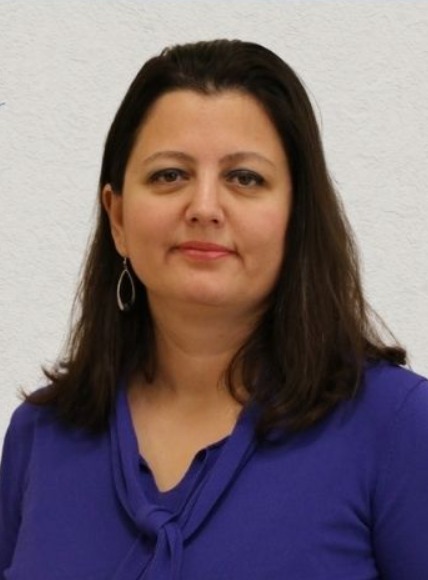
Didem Gözüpek is a Professor in the Department of Computer Engineering at Gebze Technical University, Türkiye. She received her B.S. degree in Telecommunications Engineering from Sabancı University in 2004, her M.S. degree in Electrical Engineering from the New Jersey Institute of Technology (USA) in 2005, and her Ph.D. degree in Computer Engineering from Boğaziçi University in 2012. Between 2005 and 2008, she worked as an R&D engineer at a telecommunications company in İstanbul.
Prof. Gözüpek is the recipient of several awards, including the Young Scientist (BAGEP) Award from the Science Academy of Türkiye, the Research Encouragement Award from the METU Parlar Foundation (2019), the Dr. Serhat Özyar Young Scientist of the Year Honorary Award (2013), and the Boğaziçi University PhD Thesis Award (2012).
She has served as the principal investigator of several national and international research projects. In particular, she has been the Coordinator of the COVER project, funded by the Horizon Europe Marie Skłodowska-Curie Staff Exchange programme, since 2025.
Her research interests include structural and algorithmic graph theory and optimization problems, with applications in areas such as computer networks and smart cities.
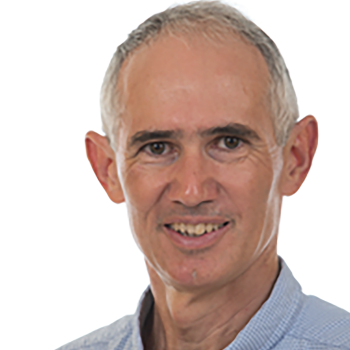
Michael Henning obtained his PhD in graph theory at the then University of Natal in 1989 under the supervision of Professor Henda Swart. He started his academic career at the University of KwaZulu-Natal, Pietermaritzburg campus, where he taught for 20 years. In 2010 he relocated to the University of Johannesburg as a research professor. His research interests are in the field of graph theory and hypergraph theory (areas within the broader field of discrete mathematics and combinatorics). His favourite topics are in the area of domination theory in graphs and transversals in hypergraphs. Michael has over 620 research publications to date, including 6 books and 2 edited books. He has successfully supervised 16 PhD students to date.
Michael Henning obtained his PhD in graph theory at the then University of Natal in 1989 under the supervision of Professor Henda Swart. He started his academic career at the University of KwaZulu-Natal, Pietermaritzburg campus, where he taught for 20 years. In 2010 he relocated to the University of Johannesburg as a research professor. His research interests are in the field of graph theory and hypergraph theory (areas within the broader field of discrete mathematics and combinatorics). His favourite topics are in the area of domination theory in graphs and transversals in hypergraphs. Michael has over 620 research publications to date, including 6 books and 2 edited books. He has successfully supervised 16 PhD students to date.
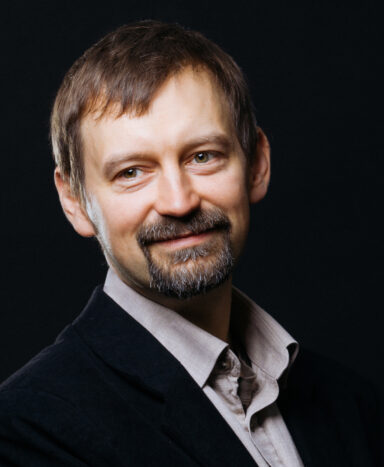
Dr hab. inż. Konstanty Junosza-Szaniawski is an Associate Professor at the Faculty of Mathematics and Information Science, Warsaw University of Technology. He received his Ph.D. in Mathematics from Warsaw University of Technology in 2004. In 2020, he obtained the habilitation (D.Sc.) in Mathematics at Warsaw University of Technology, based on the publication cycle “Coloring and L(2,1)-labeling of graphs and the plane”. His research focuses on graph theory, especially algorithmic and extremal aspects and graph coloring. He is also interested in mathematical modeling and cryptography.
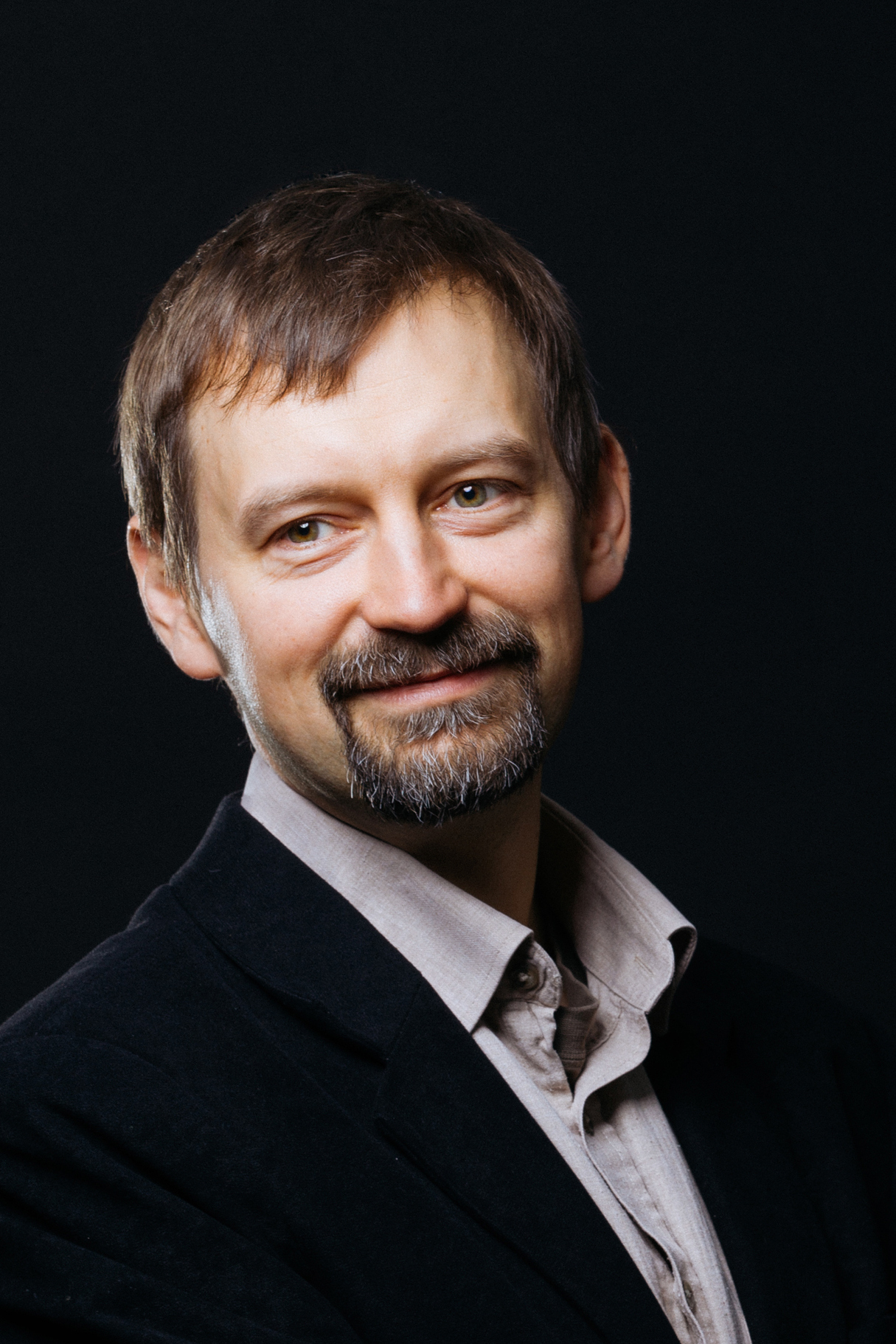
Dr hab. inż. Konstanty Junosza-Szaniawski is an Associate Professor at the Faculty of Mathematics and Information Science, Warsaw University of Technology. He received his Ph.D. in Mathematics from Warsaw University of Technology in 2004. In 2020, he obtained the habilitation (D.Sc.) in Mathematics at Warsaw University of Technology, based on the publication cycle “Coloring and L(2,1)-labeling of graphs and the plane”. His research focuses on graph theory, especially algorithmic and extremal aspects and graph coloring. He is also interested in mathematical modeling and cryptography.
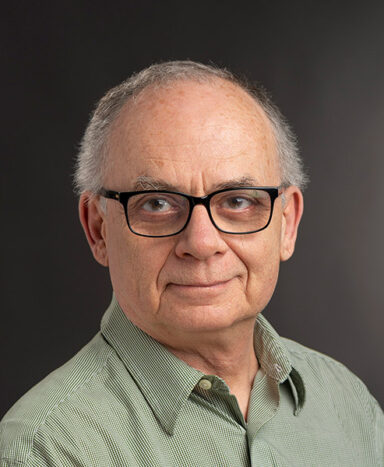
Stanislaw Radziszowski is a Professor in the Department of Computer Science since 1995. He earned Ph.D. from the Institute of Informatics at the University of Warsaw. During the years 1980-1984 he worked in IIMAS at the National Autonomous University of Mexico in Mexico City, and since 1984 at the RIT. In the 1990's he held three times 6-week visiting positions at the Australian National University in Canberra, and maintained collaborations with universities in Poland.
His main research interest is in combinatorial computing - solving classical problems in combinatorics, graph theory and design theory, usually with the help of massive computations. Bounds on Ramsey numbers are his favorite. His survey titled 'Small Ramsey Numbers', which is a regularly updated living article at the Electronic Journal of Combinatorics, became a standard reference in this area. He teaches mostly theory oriented courses, including very popular courses on cryptography, both at undergraduate and graduate levels. His recent work on applied cryptography led to joint projects with Computer Engineering Department.
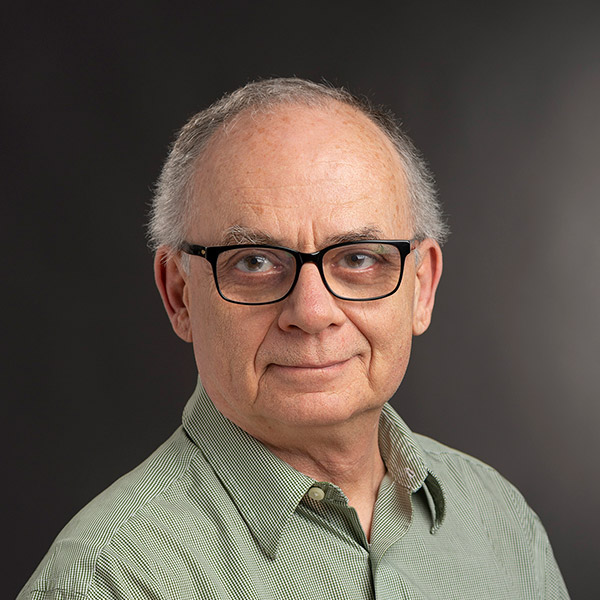
Stanislaw Radziszowski is a Professor in the Department of Computer Science since 1995. He earned Ph.D. from the Institute of Informatics at the University of Warsaw. During the years 1980-1984 he worked in IIMAS at the National Autonomous University of Mexico in Mexico City, and since 1984 at the RIT. In the 1990's he held three times 6-week visiting positions at the Australian National University in Canberra, and maintained collaborations with universities in Poland.
His main research interest is in combinatorial computing - solving classical problems in combinatorics, graph theory and design theory, usually with the help of massive computations. Bounds on Ramsey numbers are his favorite. His survey titled 'Small Ramsey Numbers', which is a regularly updated living article at the Electronic Journal of Combinatorics, became a standard reference in this area. He teaches mostly theory oriented courses, including very popular courses on cryptography, both at undergraduate and graduate levels. His recent work on applied cryptography led to joint projects with Computer Engineering Department.
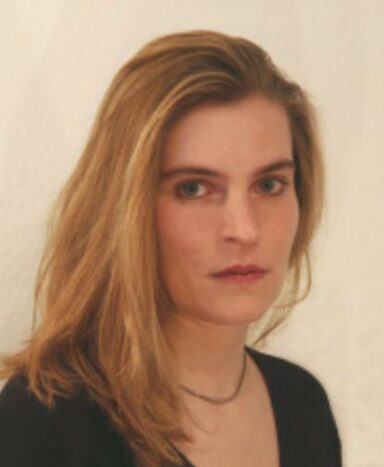
Since September 2021, Annegret Wagler is a full professor at the University Clermont Auvergne in Clermont-Ferrand, France. she was hired there in 2010 on a chair of excellence on Combinatorial Optimization and conducts since then her teaching at the engineering school ISIMA and her research at the laboratory LIMOS within the Clermont Auvergne Institute of Technology.
Her work focuses primarily on theoretical and practical aspects of combinatorial optimization problems involving graphs and polyhedra and integer linear programs as models. During the last ten years, her research included several applications on transportation and telecommunication problems. Previously, she worked as postdoctoral fellow on problems in systems biology at the Otto-von-Guericke University in Magdeburg, Germany, and defended her PhD on graphs and polyhedral theory in Berlin, Germany, under the supervision of Martin Grötschel.
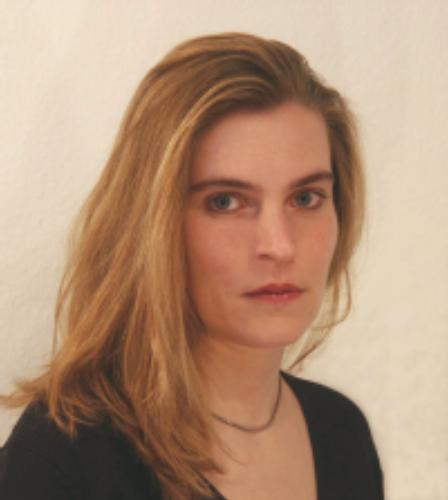
Since September 2021, Annegret Wagler is a full professor at the University Clermont Auvergne in Clermont-Ferrand, France. she was hired there in 2010 on a chair of excellence on Combinatorial Optimization and conducts since then her teaching at the engineering school ISIMA and her research at the laboratory LIMOS within the Clermont Auvergne Institute of Technology.
Her work focuses primarily on theoretical and practical aspects of combinatorial optimization problems involving graphs and polyhedra and integer linear programs as models. During the last ten years, her research included several applications on transportation and telecommunication problems. Previously, she worked as postdoctoral fellow on problems in systems biology at the Otto-von-Guericke University in Magdeburg, Germany, and defended her PhD on graphs and polyhedral theory in Berlin, Germany, under the supervision of Martin Grötschel.
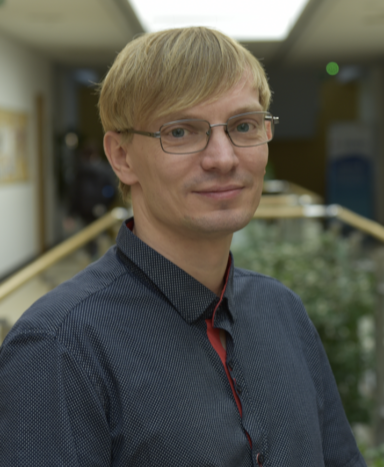
Andrzej Grzesik is an associate professor at the Institute of Mathematics of the Jagiellonian University. His research revolves around graph theory questions of extremal nature. He is known for solving various challenging open problems, including the Erdős pentagon conjecture from 1984, Erdős, Faudree and Rousseau conjecture from 1992 and Lovász conjecture from 2008. For his achievements, he was awarded the Open Mind Prize for outstanding research in combinatorics and the Scholarship of the Ministry of Science and Higher Education for outstanding young scientists. In addition to his scientific work, he is also involved in activities supporting talented youth; among others, he is the vice-chairman of the Main Committee of the Mathematical Olympiad and the national coordinator of the international mathematical competition Náboj
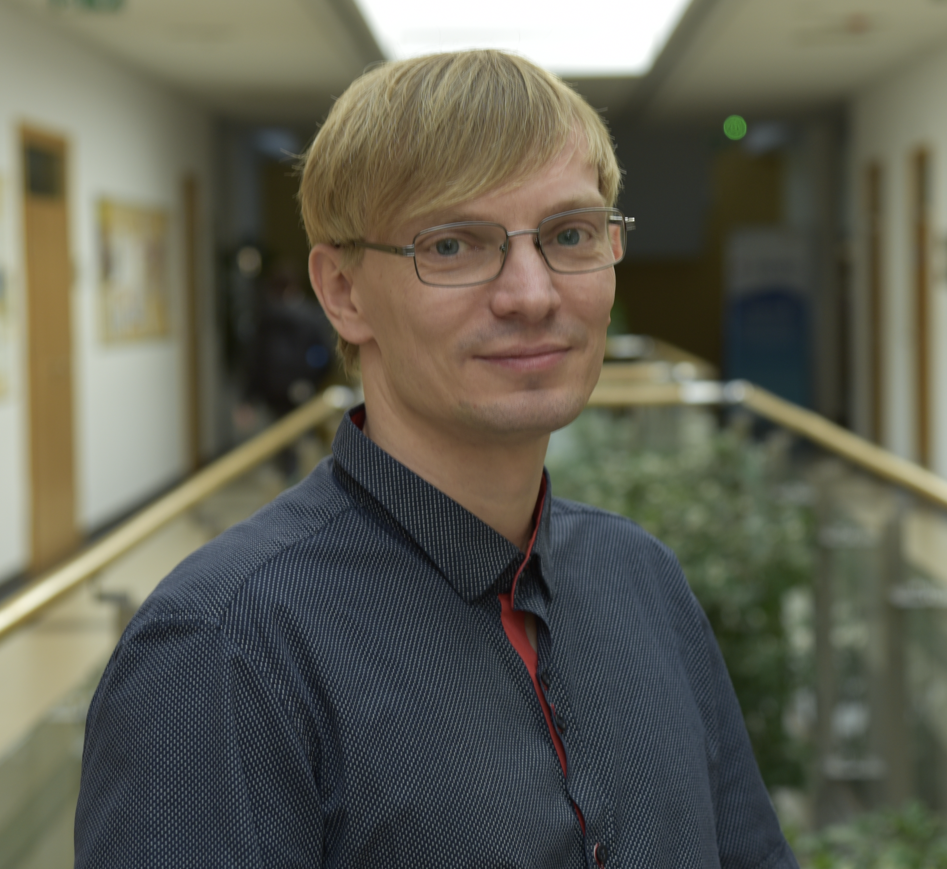
Andrzej Grzesik is an associate professor at the Institute of Mathematics of the Jagiellonian University. His research revolves around graph theory questions of extremal nature. He is known for solving various challenging open problems, including the Erdős pentagon conjecture from 1984, Erdős, Faudree and Rousseau conjecture from 1992 and Lovász conjecture from 2008. For his achievements, he was awarded the Open Mind Prize for outstanding research in combinatorics and the Scholarship of the Ministry of Science and Higher Education for outstanding young scientists. In addition to his scientific work, he is also involved in activities supporting talented youth; among others, he is the vice-chairman of the Main Committee of the Mathematical Olympiad and the national coordinator of the international mathematical competition Náboj
ORGANIZERS